
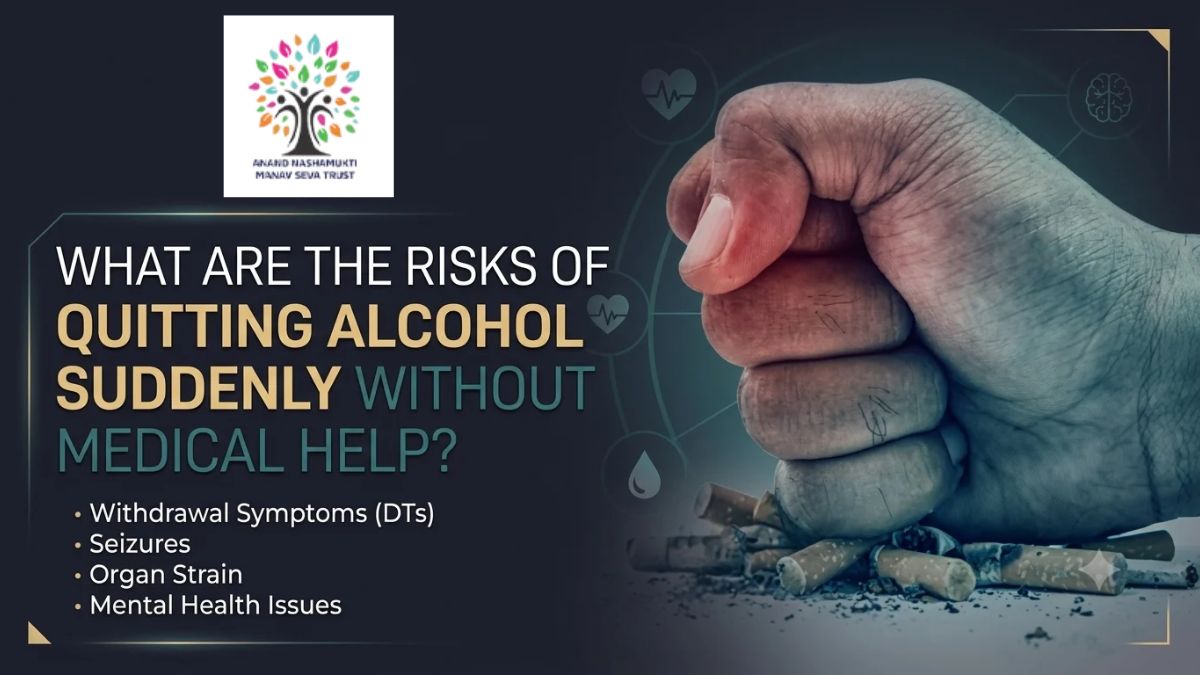
Quitting alcohol is an important step toward a healthier life, but stopping suddenly after prolonged or heavy drinking can be dangerous. People who have developed alcohol dependence may experience withdrawal symptoms ranging from anxiety, sweating, and shaking to life-threatening complications such as seizures and delirium tremens. The severity depends on factors such as drinking history, overall health, previous withdrawal episodes, and the level of alcohol dependence. Medical supervision during alcohol withdrawal helps reduce these risks and supports a safer recovery process.
If you or someone you love is struggling with alcohol dependence, seeking professional help from a Nasha Mukti Kendra in Jaipur can be an important step toward recovery. Understanding the risks of quitting alcohol suddenly can help individuals make informed decisions and seek appropriate medical care before withdrawal symptoms become severe.
What Happens When You Stop Drinking Alcohol Suddenly?
When someone regularly consumes large amounts of alcohol, the brain and nervous system gradually adapt to its effects. Alcohol slows certain brain activities, and the body adjusts by changing how its chemical signalling systems function.
When alcohol consumption suddenly stops, these adaptations can cause the nervous system to become excessively active. This process is known as alcohol withdrawal.
Alcohol withdrawal symptoms may begin within 6–24 hours after the last drink, although the timing varies. Some people experience mild symptoms, while others develop serious complications that require emergency medical treatment.
Common alcohol withdrawal symptoms include anxiety, irritability, sweating, headaches, nausea, vomiting, difficulty sleeping, and hand tremors. In severe cases, individuals may experience hallucinations, seizures, confusion, or delirium tremens.
Important: Alcohol withdrawal can become life-threatening. People with alcohol dependence should seek medical advice before abruptly stopping drinking. Anyone experiencing seizures, severe confusion, hallucinations, or reduced consciousness needs immediate emergency medical attention.
What Are the Major Risks of Quitting Alcohol Suddenly?
Stopping alcohol without medical support can expose individuals to several physical and psychological complications. Although not everyone experiences severe withdrawal, it is difficult to predict who will develop dangerous symptoms without an appropriate clinical assessment.
1. Severe Alcohol Withdrawal Symptoms
One of the earliest risks of quitting alcohol suddenly is the development of uncomfortable withdrawal symptoms. These occur as the body adjusts to functioning without alcohol.
Symptoms may include excessive sweating, shaking hands, nausea, vomiting, anxiety, restlessness, a rapid heartbeat, and increased blood pressure. Some individuals also experience sleep disturbances, irritability, and difficulty concentrating.
Mild symptoms can still be distressing, particularly when a person has no support or medical guidance. Severe symptoms require prompt assessment because withdrawal can progress unexpectedly.
Professional alcohol de-addiction treatment helps clinicians assess symptoms, monitor changes, and determine whether medication or hospital-based care is necessary.
2. Alcohol Withdrawal Seizures
Alcohol withdrawal seizures are among the most serious complications associated with abruptly stopping heavy or prolonged drinking. They commonly occur within the first 8–48 hours after the last drink, although individual experiences vary.
Seizures may occur even in people who initially experience only mild withdrawal symptoms. A history of withdrawal seizures or repeated withdrawal episodes can increase concern about future complications.
A seizure requires immediate emergency medical attention. Do not attempt to restrain the person or place anything in their mouth. Move nearby objects away to reduce injury, and follow emergency medical instructions.
Medically supervised alcohol detoxification helps healthcare professionals identify risk factors and provide appropriate treatment to reduce the likelihood of serious complications.
3. Delirium Tremens (DTs)
Delirium tremens, commonly called DTs, is a severe form of alcohol withdrawal that can cause sudden confusion, agitation, changes in awareness, hallucinations, fever, and significant disturbances in heart rate or blood pressure.
It often develops around 48–72 hours after the last drink but can occur later. It is a medical emergency that may be fatal without appropriate treatment.
People with a history of severe withdrawal, prolonged heavy alcohol use, or certain underlying medical conditions may be at increased risk.
Never try to manage suspected delirium tremens at home. Immediate hospital-based medical care is essential.
4. Dehydration and Electrolyte Imbalances
Heavy alcohol consumption can contribute to dehydration, poor nutrition, and imbalances in electrolytes such as potassium and magnesium. Vomiting, sweating, and reduced food intake during withdrawal can make these problems worse.
Electrolyte disturbances may contribute to weakness, irregular heart rhythms, confusion, and seizures. People with existing liver disease, heart problems, or other medical conditions may face additional risks.
Healthcare professionals can assess hydration, nutritional status, and electrolyte levels when clinically indicated. Appropriate treatment may include fluids, electrolyte replacement, and nutritional support.
5. Increased Heart Rate and Blood Pressure
Alcohol withdrawal can overstimulate the nervous system, causing a rapid heartbeat, elevated blood pressure, sweating, and tremors.
These changes may be particularly concerning for individuals with cardiovascular disease or other underlying health problems. Severe withdrawal can place considerable stress on the body and may require close monitoring.
Medical supervision during alcohol withdrawal allows clinicians to monitor vital signs, assess complications, and provide appropriate medication when necessary.
6. Anxiety, Depression, and Sleep Disturbances
The psychological effects of alcohol withdrawal can be just as challenging as its physical symptoms. Some individuals experience intense anxiety, irritability, low mood, restlessness, or insomnia after stopping alcohol.
These symptoms may increase the urge to drink again to obtain temporary relief. However, returning to alcohol does not resolve the underlying dependence and can prolong the cycle of addiction.
Professional counselling, psychological support, and appropriate treatment can help individuals manage emotional difficulties and develop healthier coping strategies.
Anyone experiencing suicidal thoughts or feeling unable to stay safe should seek immediate professional help.
Why Is Medically Supervised Alcohol Detox Important?
Medically supervised alcohol detox is a structured process in which healthcare professionals assess and manage withdrawal symptoms while monitoring the individual's health.
Its purpose is to reduce withdrawal-related risks, address medical complications, and prepare the person for ongoing alcohol dependence treatment.
Depending on the individual's condition, medically supervised detoxification may involve:
- Medical assessment: Reviewing alcohol consumption, previous withdrawal experiences, medications, and underlying health conditions.
- Withdrawal monitoring: Assessing symptoms, vital signs, hydration, and other clinical indicators.
- Medication when appropriate: Clinicians may prescribe medicines, including benzodiazepines, to manage withdrawal and reduce seizure risk.
- Nutritional support: Assessing nutritional deficiencies and providing thiamine (vitamin B1) when indicated to help prevent serious neurological complications.
- Psychological support: Helping individuals manage anxiety, distress, and the emotional challenges associated with withdrawal.
- Continuing treatment: Planning counselling, rehabilitation, relapse prevention, and follow-up care after detoxification.
Not everyone requires the same level of care. Depending on withdrawal severity and individual risk factors, treatment may take place in a suitable supervised setting or require hospital admission.
Detoxification is an important first step, but it is not a complete treatment for alcohol addiction. Long-term recovery often requires continued medical care, counselling, behavioural interventions, and relapse-prevention support.
When Should You Seek Help From a Nasha Mukti Kendra
Seeking professional assistance is especially important when alcohol consumption has become difficult to control or stopping drinking causes withdrawal symptoms.
Consider consulting a qualified healthcare professional if you or a family member:
- Drinks heavily or regularly and experiences shaking or sweating when alcohol is unavailable.
- Needs alcohol in the morning to feel normal.
- Has previously experienced alcohol withdrawal seizures or severe confusion.
- Has repeatedly tried to stop drinking but returned to alcohol use.
- Experiences declining physical health, relationship difficulties, or problems at work because of alcohol.
- Has an underlying medical condition that could complicate withdrawal.
When choosing a Nasha Mukti Kendra in Jaipur, look for a facility that prioritises medical assessment, qualified healthcare professionals, evidence-based treatment, psychological counselling, and an appropriate referral pathway for emergencies.
A reputable De addiction center in Jaipur should explain its treatment process clearly and avoid promising guaranteed recovery. Ask whether medical supervision is available during withdrawal, how emergencies are handled, and what support is provided after detoxification.
People with severe withdrawal symptoms or a high risk of complications may need hospital-based treatment rather than routine rehabilitation care.
How Does Alcohol De-Addiction Treatment Support Long-Term Recovery?
Successful alcohol addiction recovery involves more than stopping alcohol consumption. It also requires addressing the behavioural, psychological, and social factors that contribute to continued drinking.
A comprehensive alcohol de-addiction treatment plan may include medical evaluation, individual counselling, behavioural therapy, family involvement, support groups, and relapse-prevention planning.
Counselling can help individuals recognise triggers, manage stress, improve relationships, and develop healthier responses to difficult emotions. Healthcare professionals may also consider medications for alcohol use disorder when appropriate.
Family education can play an important role by helping loved ones understand addiction, recognise warning signs, and provide constructive support without encouraging harmful drinking patterns.
If you are looking for the Best Nasha Mukti Kendra in Jaipur, consider the quality of medical oversight, individualised treatment planning, staff qualifications, privacy practices, and availability of follow-up care rather than relying on promotional claims alone.
An Alcohol De Addiction Center in Jaipur that provides appropriate medical care alongside psychological and behavioural support can help individuals work toward sustainable recovery.
Can You Quit Alcohol Safely at Home?
Whether alcohol withdrawal can be managed outside a hospital depends on the individual's medical condition, drinking history, withdrawal risk, and available support.
People with alcohol dependence should consult a healthcare professional before stopping abruptly. Home-based management may be appropriate for carefully selected individuals only when a qualified clinician determines that it is safe and arranges suitable monitoring and follow-up.
Trying to manage potentially severe withdrawal alone is dangerous. Do not attempt an unsupervised alcohol detox or use sedatives without medical guidance.
If seizures, severe confusion, hallucinations, fainting, or other serious symptoms occur, seek emergency medical care immediately.
Take the First Step Toward Safer Alcohol Addiction Recovery
Quitting alcohol can be a life-changing decision, but the process should prioritise safety, especially for people who have developed physical dependence. Sudden withdrawal can cause serious complications, including seizures and delirium tremens, making professional assessment essential.
With appropriate medical supervision, evidence-based alcohol de-addiction treatment, psychological support, and a continuing recovery plan, individuals can work toward a healthier life without alcohol.
If you or someone close to you is struggling with alcohol dependence, consult a qualified healthcare professional to discuss safe withdrawal management and suitable treatment options. Seeking help early can reduce avoidable risks and make the path toward recovery more manageable.